Link Abutment
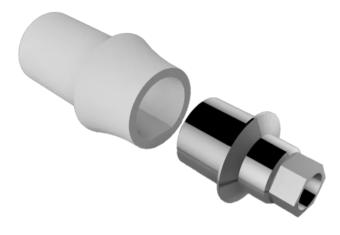
Link abutments offer the clinical
advantages of tooth-like coloured
restoration linked with the biological
compatibility & strengh of Titanium
Titanium abutments may cause metallic
show through resulting in greyish
discoloration of the surrounding soft
tissues compromising aesthetic outcome
especially in the aesthetic zone.
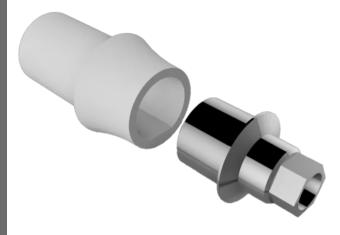
The Link Abutment consists of two parts. A
Titanium base to which is bonded a
laboratory designed digitally fabricated
Zirconia abutment sleeve. If a screw
retained crown is required the Zirconia
crown can be bonded to the Ti-base
directly. .
Multi-Implant Post
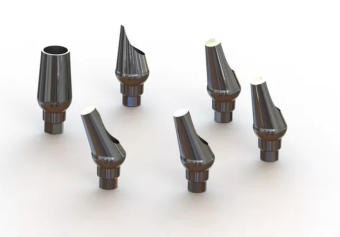
Combines a 12 sided (dodecagon) with a
taper lock to produce a stock abutment
range with infinite 3-dimensional angular
corrections freeing the technician from the
restorative constraints imposed by limited
abutment choice.
Multiple Features
1. Taper Lock Seal - all restorative
components have a taper lock and anti-
rotation 12 sided connection forming a
biological seal eliminating odour and
increasing stability.
2. Taper lock reduces component loosening.
3. Twelve sided anti-rotational flats
incorporated in the body of the abutment
location allows 12 possible 30 degree
horizontal offsets.
4. Available in six vertical angles 0 to 25
degrees in 5 degree increments
5. One abutment diameter fits all implant
diameters
6. Prepable abutment allows precise
placement of intrasulcular margins
7. Control of the emergence profile as the
abutment has been designed to be
laboratory modified.
8. Internal thread used in combination with
the Abutment Release Tool to remove
abutments which are locked together.
Order Codes:
MP0 (Multi Implant Post 0 Degree)
MP5 (Multi Implant Post 5 Degree)
MP10 (Multi Implant Post 10 Degree)
MP15 (Multi Implant Post 15 Degree)
MP20 (Multi Implant Post 20 Degree)
MP25 (Multi Implant Post 25 Degree)
d
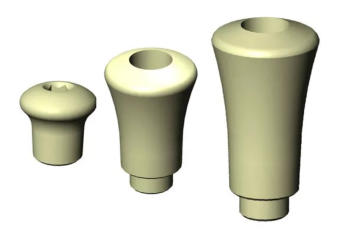


Transmucosal Tissue Expanders
Adaptable healing abutments that can be
modified to guide soft tissue healing &
develope the emergence profile following
implant exposure.
Made from biocompatible PEEK they can
be adjusted with an acrylic bur to virtually
any size. A range of three sizes means
chairside adjustment is kept to a minimum,
greatly speeding up the exposure process
and loading stage. The tissue expanders
are seated and removed using the Multi-
Driver and pushed into the implant until
the friction lock engages. Once soft tissue
healing is complete and the gingival
contour stable the healing abutment is
simply twisted free of the implant using the
Multi-Driver.
The healing abutments are specifically
designed to manage soft tissue healing to
establish contour enhancing tissue
aesthetics. Made from a specially
formulated polymer that permits
radiographic confirmation of accurate
component seating. The healing
abutments are compatible with all implant
platforms and incorporate a friction lock
which securely retains them on the implant
without the need for a retaining screw. This
reduces complexity and costs and allows
easy modification of the abutment.
Biocompatibility tests confirm that the
polymer demonstrates no evidence of
cytotoxicity, systemic toxicity, irritation or
any macroscopic reaction response. These
single use healing abutments are intended
for short term application only of no more
than three months.
The healing abutments have been
designed to reduce the number of
restorative steps and therefore complexity
and restorative costs. These components
have a a concave submergence profile
which promotes soft tissue stability, they
can be further shaped using an acrylic bur,
to help guide and develop the emergence
profile.
The healing abutment range and
restorative abutments have submergence
profiles that match. This ensures that the
emergence profile of the definitive
restorations conforms to the emergence
profile that was established during the
healing phase, ensuring the predictability
and long term stability of the soft tissue
contour.
The healing abutments can also be used at
fixture placement in a one stage protocol
according to bone type and fixture stability.
Order Codes:
Mini Transmucosal Tissue Expander- MTE1
Midi Transmucosal Tissue Expander- MTE2
Maxi Transmucosal Tissue Expander-MTE3
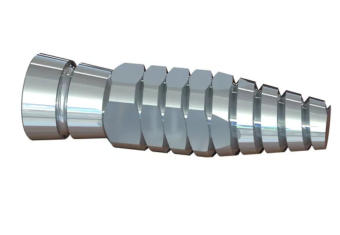
Ankorlock Universal Analogue
Implant replica use for laboratory models
Because the hex diameter for the implant
range is the same it is only necessary to
have one universal implant analogue in
order to fabricate analogue models. This
limits the amount of stock required and
simplifies implant restoration.
Order Code: AUA.
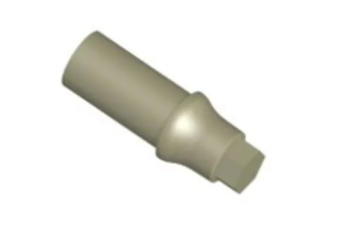
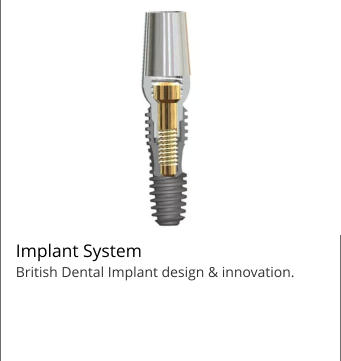
Laser Abutment Laboratory
Analogue
A laboratory made customisable
abutment
At the laboratory the technician
applies wax to the LARMA to build up
the desired abutment design which
can then be made in titanium using
CADCAM technology. This produces a
precision implant abutment interface
of superior quality to traditional cast
precious metal custom abutments.
Indications:
1. Challenging restorative situations
where the mucosa is 3 mm or more
deep or the implant head is not
optimally positioned.
2. Posterior region of the mouth
where the occlusal forces are highest.
3. Where the inter-occlusal height is
low necessitating a screw retained
restoration.
Code: LAMA.






Restorative Components
System restorative components are compatible with all diameters of implant.
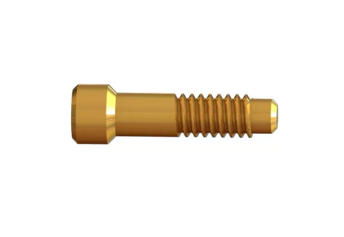
High Torque Screws
Only one diameter of prothetic screw is
used throughout the entire system,
reducing complexity & component
inventory
The reduced size of the domed screw head
allows deeper screw seating within the
abutment, improving abutment stability.
Lower profile screw heads allow greater
abutment preparation while avoiding the
risk of screw head damage. Underneath
the screw head is a taper that on
tightening engages the internal abutment
taper locking them together. This
minimises the incidence of abutment
loosening. The possibility of cross-
threading is minimised by a unique lead-in
tip that guides the screw during insertion.
It is inserted using the Multi-Driver and is
coloured gold to help aid identification
and the correct combination of
instrumentation. It is extremely strong
resisting insertion torques in excess of 100
Ncm.
Order Code: PS
2006-2025 nanodent Technologies. All rights
reserved.
HEADING TEXT

Useful Information
2006-2023 nanodent Technologies. All
rights reserved.
Get in Touch

Ankorlock Universal Analogue
Implant replica use for laboratory models
Because the hex diameter for the implant
range is the same it is only necessary to
have one universal implant analogue in
order to fabricate analogue models. This
limits the amount of stock required and
simplifies implant restoration.
Order Code: AUA.

Restorative Components
System restorative components are compatible
with all diameters of implant.
Laser Abutment Laboratory
Analogue
A laboratory made customisable
abutment
At the laboratory the technician
applies wax to the LARMA to build up
the desired abutment design which
can then be made in titanium using
CADCAM technology. This produces a
precision implant abutment interface
of superior quality to traditional cast
precious metal custom abutments.
Indications:
1. Challenging restorative situations
where the mucosa is 3 mm or more
deep or the implant head is not
optimally positioned.
2. Posterior region of the mouth
where the occlusal forces are highest.
3. Where the inter-occlusal height is
low necessitating a screw retained
restoration.
Code: LAMA.

High Torque Screws
Only one diameter of prothetic screw is
used throughout the entire system,
reducing complexity & component
inventory
The reduced size of the domed screw head
allows deeper screw seating within the
abutment, improving abutment stability.
Lower profile screw heads allow greater
abutment preparation while avoiding the
risk of screw head damage. Underneath
the screw head is a taper that on
tightening engages the internal abutment
taper locking them together. This
minimises the incidence of abutment
loosening. The possibility of cross-
threading is minimised by a unique lead-in
tip that guides the screw during insertion.
It is inserted using the Multi-Driver and is
coloured gold to help aid identification
and the correct combination of
instrumentation. It is extremely strong
resisting insertion torques in excess of 100
Ncm.
Order Code: PS



Multi-Implant Post
Combines a 12 sided (dodecagon) with a
taper lock to produce a stock abutment
range with infinite 3-dimensional angular
corrections freeing the technician from the
restorative constraints imposed by limited
abutment choice.
Multiple Features
1. Taper Lock Seal - all restorative
components have a taper lock and anti-
rotation 12 sided connection forming a
biological seal eliminating odour and
increasing stability.
2. Taper lock reduces component loosening.
3. Twelve sided anti-rotational flats
incorporated in the body of the abutment
location allows 12 possible 30 degree
horizontal offsets.
4. Available in six vertical angles 0 to 25
degrees in 5 degree increments
5. One abutment diameter fits all implant
diameters
6. Prepable abutment allows precise
placement of intrasulcular margins
7. Control of the emergence profile as the
abutment has been designed to be
laboratory modified.
8. Internal thread used in combination with
the Abutment Release Tool to remove
abutments which are locked together.
Order Codes:
MP0 (Multi Implant Post 0 Degree)
MP5 (Multi Implant Post 5 Degree)
MP10 (Multi Implant Post 10 Degree)
MP15 (Multi Implant Post 15 Degree)
MP20 (Multi Implant Post 20 Degree)
MP25 (Multi Implant Post 25 Degree)
d
Transmucosal Tissue Expanders
Adaptable healing abutments that can be
modified to guide soft tissue healing &
develope the emergence profile following
implant exposure.
Made from biocompatible PEEK they can be
adjusted with an acrylic bur to virtually any
size. A range of three sizes means chairside
adjustment is kept to a minimum, greatly
speeding up the exposure process and
loading stage. The tissue expanders are
seated and removed using the Multi-Driver
and pushed into the implant until the
friction lock engages. Once soft tissue
healing is complete and the gingival contour
stable the healing abutment is simply
twisted free of the implant using the Multi-
Driver.
The healing abutments are specifically
designed to manage soft tissue healing to
establish contour enhancing tissue
aesthetics. Made from a specially
formulated polymer that permits
radiographic confirmation of accurate
component seating. The healing abutments
are compatible with all implant platforms
and incorporate a friction lock which
securely retains them on the implant
without the need for a retaining screw. This
reduces complexity and costs and allows
easy modification of the abutment.
Biocompatibility tests confirm that the
polymer demonstrates no evidence of
cytotoxicity, systemic toxicity, irritation or
any macroscopic reaction response. These
single use healing abutments are intended
for short term application only of no more
than three months.
The healing abutments have been designed
to reduce the number of restorative steps
and therefore complexity and restorative
costs. These components have a a concave
submergence profile which promotes soft
tissue stability, they can be further shaped
using an acrylic bur, to help guide and
develop the emergence profile.
The healing abutment range and restorative
abutments have submergence profiles that
match. This ensures that the emergence
profile of the definitive restorations
conforms to the emergence profile that was
established during the healing phase,
ensuring the predictability and long term
stability of the soft tissue contour.
The healing abutments can also be used at
fixture placement in a one stage protocol
according to bone type and fixture stability.
Order Codes:
Mini Transmucosal Tissue Expander- MTE1
Midi Transmucosal Tissue Expander- MTE2
Maxi Transmucosal Tissue Expander-MTE3
Link Abutment
Link abutments offer the clinical
advantages of tooth-like coloured
restoration linked with the biological
compatibility & strengh of Titanium
Titanium abutments may cause metallic
show through resulting in greyish
discoloration of the surrounding soft
tissues compromising aesthetic outcome
especially in the aesthetic zone.
The Link Abutment consists of two parts.
A Titanium base to which is bonded a
laboratory designed digitally fabricated
Zirconia abutment sleeve. If a screw
retained crown is required the Zirconia
crown can be bonded to the Ti-base
directly. .